

In 1972 a company called General Development Corporation bought about 32,000 acres east of LaBelle and drew a town on it. Thousands of lots. Streets with names, curving through the palmetto, all of it mapped out before anybody lived there.
The roads got built. Power came out. Water and sewer came. Then in 1990 the company pleaded guilty to federal fraud over what it had been charging for the houses, filed for bankruptcy, and Port LaBelle stayed mostly empty for decades.
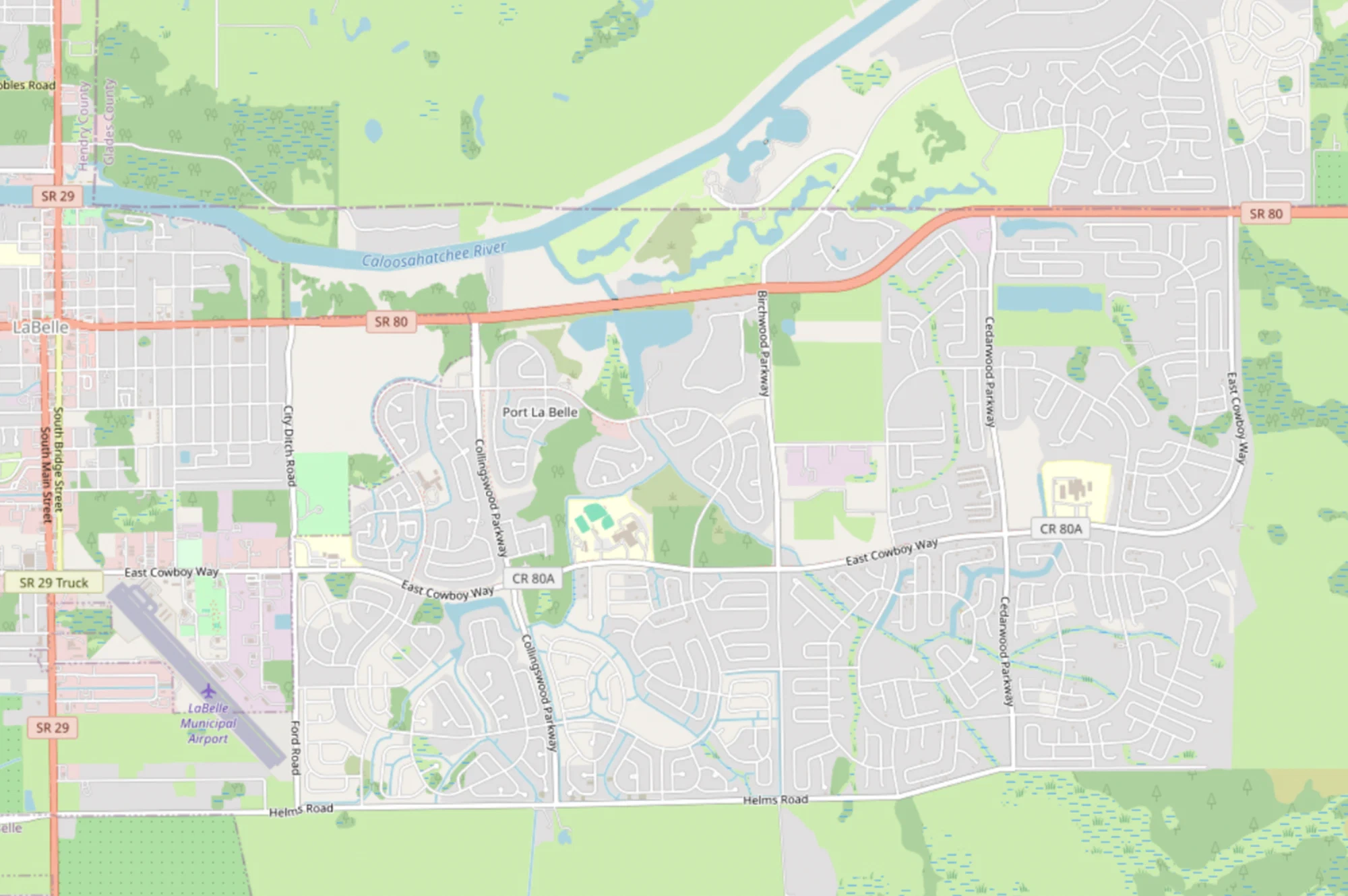
Now it’s filling in fast. About 36% of the homes here have gone up since 2010, and 555 of them since 2020.
Internet was the utility that never made it down most of these streets. People close on a house, call to get service turned on, and find out there’s no cable or fiber line on their street. Not now, and no date for one.
So they put up a satellite dish. Nearly one in five Port LaBelle homes runs on satellite internet, 523 households out of 2,755, from the Census Bureau’s 2020 to 2024 survey. Another 136 in LaBelle proper. Nationally that number is in the low single digits.
A resident told WINK News in April: “When we built the house, they said we would have cable services, you know, internet, everything.” That family was paying $130 a month for Starlink that dropped out in bad weather, and gave up a work-from-home job over it. WINK ran the availability check on air. No cable, no fiber at the address. (WINK News, April 2026)
Here is what your options actually cost you now, and what changed.
Two very different things get called satellite
Most articles about satellite internet lump it all together and quote a lag number that’s wrong for half the market.
Viasat® and HughesNet® sit about 22,000 miles up. Your signal travels more than 44,000 miles round trip, which adds 500 to 700 ms of delay. No plan upgrade fixes that.
Starlink® orbits at roughly 350 miles, so its lag lands somewhere around 25 to 60 ms. That’s a genuinely different product, and anyone telling you Starlink has half-second lag hasn’t used it.
The reasons to leave are different too.
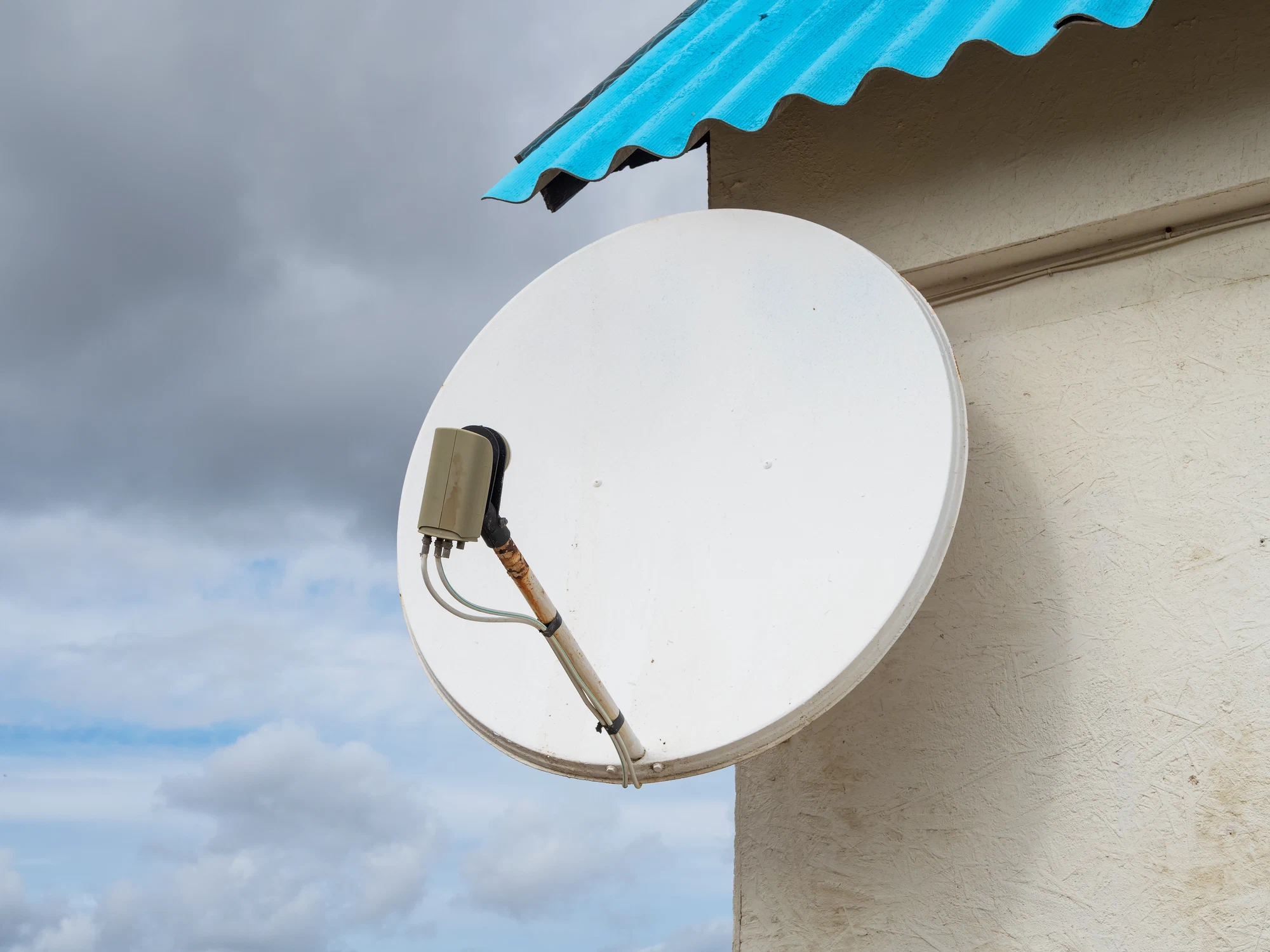
If you’re on Viasat® or HughesNet®
Viasat reported in May that fixed services revenue fell 24% year over year, with US fixed broadband subscribers still declining and roughly 130,000 left.
The paperwork is the part that affects you.
Viasat’s data policy has two thresholds, and most comparison sites only mention the second one. Go past about 360 GB in a 30-day period and you “should expect to receive about half of your normal service speeds.” Go past about 850 GB and you “may experience significantly slower speeds.” The first slowdown lands well before the number you usually see quoted. And 360 GB is not much. One house streaming in 4K most evenings will hit it before the month ends.
The same agreement has a second clause worth knowing. If you change your service address or your plan, and that needs new equipment or a service call, you commit to a fresh 24-month term. Moving house can restart your contract.
HughesNet lands in a similar place and its terms are blunt about it: “All Service Plans require a commitment of twenty-four (24) months.” Cancel early and the fee is $400 flat for the first ninety days, then it drops by $15 for each month of active service after that. Buying your equipment instead of leasing runs $299.99 up front and does not shorten the commitment.
None of this is hidden. It’s just written where nobody looks until they want out.
Do the math before you call them.
Check what's available at your street first. Then that early termination fee is a number you can weigh, instead of a reason to keep putting it off.
Check availability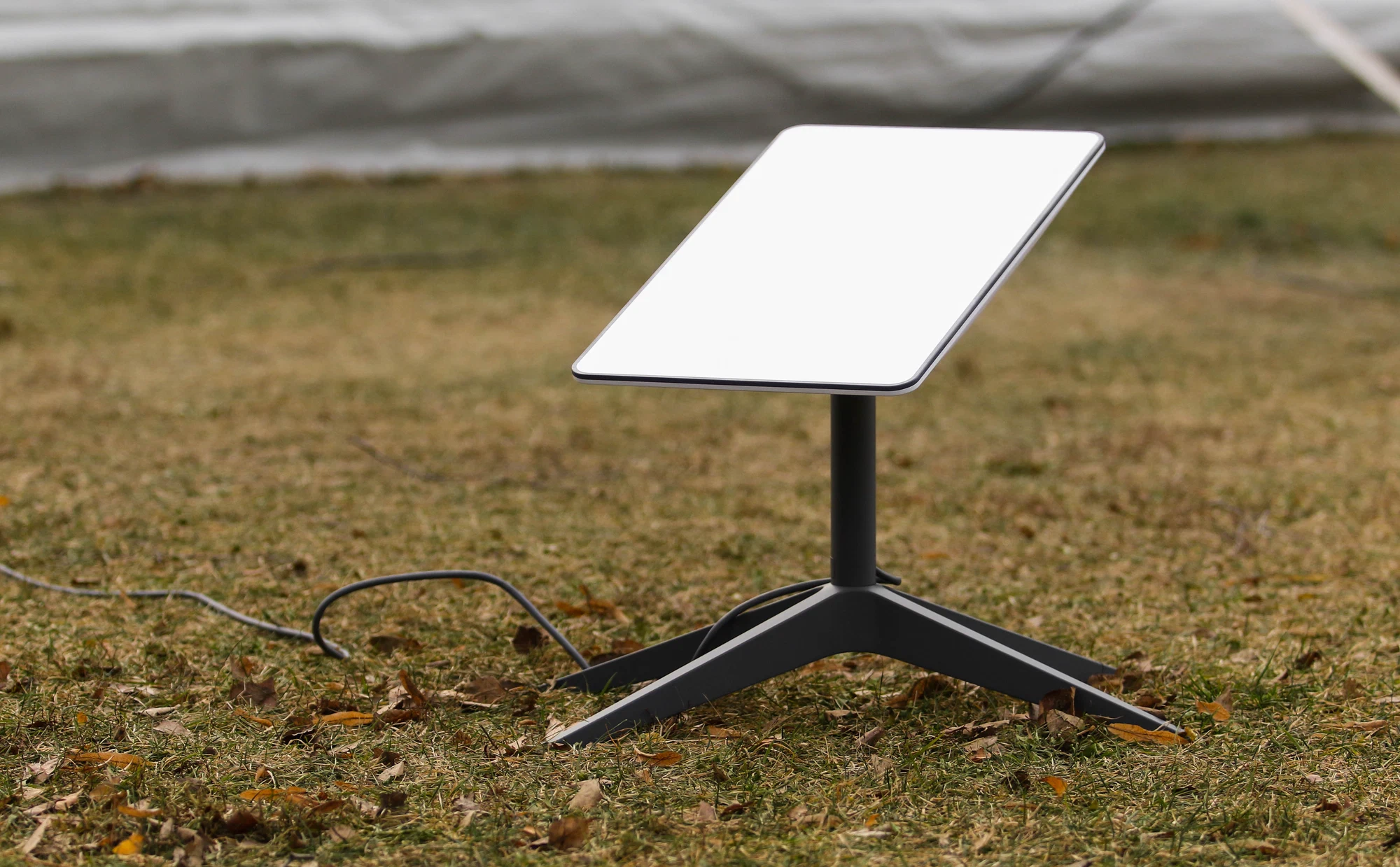
If you’re on Starlink®
Starlink does one thing nothing else can. It reaches anywhere with open sky. If you’re on a hunting camp at the end of six miles of dirt, that’s your answer and you should stop reading.
For a house in Port LaBelle, four things are worth knowing.
You can’t find out the price without starting checkout. In busy areas Starlink adds a one-time demand surcharge. Their terms say an order “may be subject to a one-time additional charge depending on the location of your Service address, the Service Plan you choose, and the Starlink Kit model you select,” and that changing your address or plan later can trigger it again. Because it keys off your specific address, nobody can quote you a number in advance. You find out at checkout.
Trees are a bigger problem than people expect. Starlink puts it on you to install the kit “in a location that has a clear field of view of the sky.” Their app checks the spot before you mount anything.
The way it fails is what catches people. An obstructed dish doesn’t run slow, it cuts out. As satellites track across the sky and pass behind a branch, you lose the connection for a second or two, then get it back. Run a speed test and everything looks fine. Get on a video call or a game and it’s unusable.
Live oaks and cabbage palms aren’t a small detail around here. The problem also moves. A dish that was clean in February can start stuttering in June once the trees fill in, and wind pushes branches through the signal all year.
Storms interrupt it. Rain absorbs the frequencies Starlink uses. Light rain is fine. A hard cell overhead causes slowdowns or short dropouts while it passes. From June through September in Southwest Florida, that’s most afternoons.
You’re the installer. Starlink’s terms say so directly: “You are responsible for the installation of the Starlink Kit.” The app helps you find a clear spot and aim the dish, and it does that well. Everything after that is you.
Their own advice if the job looks unsafe is to “not install it and seek professional assistance.” Which means find someone and pay them.
That means you’re the one on the ladder in August, picking the mounting spot, and drilling the holes. If you put a hole in your roof and it leaks next spring, that’s your roof and your problem. If the dish ends up somewhere the trees will reach in two years, you find out in two years. Nobody is coming to check the work, because you are the person who did it.
If you’re handy, it’s a Saturday. Just know that “free installation” and “no installation” are not the same thing.
Somebody else can do the climbing.
Streamline sends a local technician to do the whole install, and you know the price before you commit to anything. Check whether a tower reaches your address.
Check availability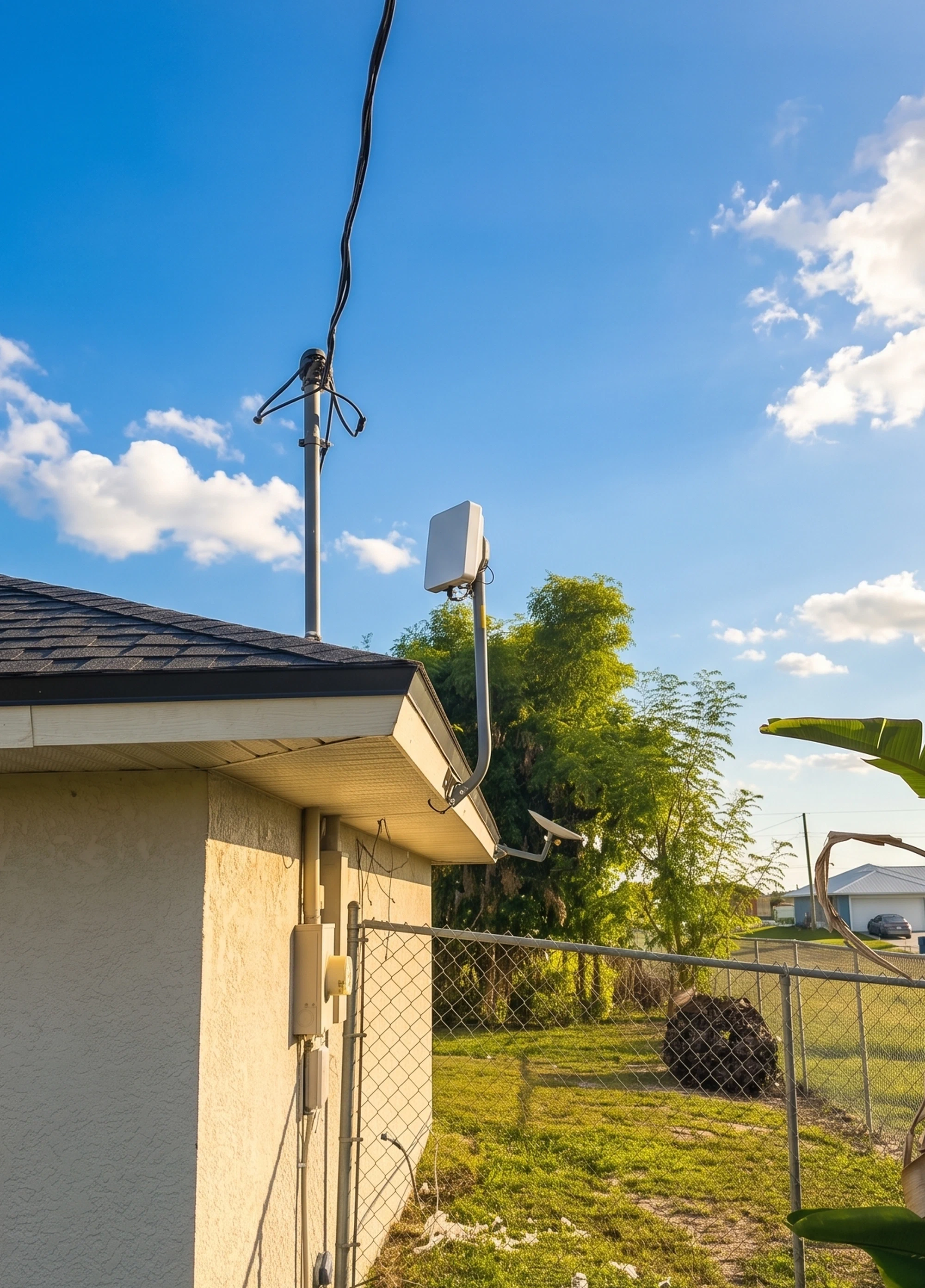
What we do instead
Streamline is fixed wireless. A small antenna on your house talks to one of our towers a few miles away. Not fiber, not satellite, not a cell plan in a box.
Because your signal only travels a few miles instead of to orbit, lag runs 15 to 30 ms. The antenna doesn’t need an open dome of sky, just a workable path to the tower, and it gets through tree cover that would blind a dish. Rain that interrupts a satellite link generally doesn’t bother a few miles of ground-level path.
Data is unlimited, with no cap and no throttle date on the calendar. Residential service is month to month with no contract and no early termination fee, and the price you sign up at is the price you keep. Residential plans in LaBelle and Port LaBelle run from $55 a month for 50/10 up to $105 for 300/60, bursting to 600/120.
Somebody else goes up the ladder
Standard installation is free, and a licensed, insured Streamline technician does the whole job. They pick the mounting spot, make and seal any penetration, bond the mount properly, and put surge protection on the line before it enters your house. Florida leads the country in lightning density, so that last part is what protects your equipment and your house.
It takes about an hour. You stay inside where it’s cool. And when it’s done, the work is ours, which means if something about it isn’t right, you call us and we come back out. That’s the part you can’t get from a box on the porch.
Our towers run on three separate upstream feeds using a mix of wireless and ground fiber, with battery backup at every site and generators at some. That’s where the 99.9% uptime target comes from. The technician who shows up lives in Southwest Florida.
One thing we do differently: we check your actual address, not your ZIP code. Distance and what stands between your roof and the tower decide whether this works, so we look before we sell. Occasionally that means we tell you no. We would rather do that than put a bad install on your house and take your money for it.
Side by side
| Streamline | Starlink | Viasat / HughesNet | |
|---|---|---|---|
| Lag | 15 to 30 ms | 25 to 60 ms | 500 to 700 ms |
| Data | Unlimited | Varies by plan | Slows above a monthly limit |
| Speeds | 50/10 up to 300/60, bursting to 600/120 | Varies by plan and congestion | Often below advertised at peak |
| Needs clear sky | No | Yes, strictly | Yes |
| Heavy rain | Little effect | Slowdowns and dropouts | Slowdowns and dropouts |
| Up-front cost | Free standard install, router included | Hardware, plus a possible demand surcharge set by address | Equipment lease or $299.99 purchase |
| Contract | None on residential | None | Usually 24 months |
| Price changes | Locked for as long as you keep the plan | Can change | Promo pricing steps up |
| Support | Local, by phone | App ticket queue | Call center |
| Monthly | $55 to $105 in LaBelle and Port LaBelle | $55 to $130 | $40 to $130 by tier |
How to actually switch
The order matters, and it’s the part people get wrong.
- Check your address first. Don’t cancel anything before you know what you can get. Check availability here.
- Read your current agreement. How many months are left, what the early termination fee is today, and whether your equipment is leased or owned. For Viasat, check whether a recent move quietly restarted your term.
- Get the new service working before you cancel. A local tech does the install in about an hour, and most homes are online within a week of booking. Don’t leave yourself a gap.
- Then cancel. Our guide to switching has the scripts for getting off a retention call quickly.
- Return the dish with a paper trail. Photograph the receipt. Most equipment fee fights come down to missing tracking.
If your early termination fee still makes the math ugly, work out the month it stops making sense to stay, and come back then.
The dish was supposed to be temporary. It has been years. There is a tower a few miles from your house now, and finding out takes about a minute.
See what's on your street.
We check the actual address, not the ZIP code. If we can't reach you, we'll tell you that too.
Check availabilitySources Every claim about another provider, and where it came from
Everything below about another provider comes from that provider’s own published terms, data policy, FCC broadband label, or financial reporting. Terms change. Check the current version before you act on any of it.
Viasat
- Data thresholds: Viasat’s unlimited data policy states that usage “trending below 360 GBs in any 30-day period” is typical, and that “customers trending to exceed the typical usage threshold should expect to receive about half of their normal service speeds.” A second threshold, “consistent with data usage trending to exceed 850 GB of data usage in any 30-day period,” is where customers “may experience significantly slower speeds.” Both figures are Viasat’s. Current documents: viasat.com/legal.
- The clause committing you to a new 24-month minimum term when a change of service location or plan requires upgraded equipment or a service call appears in Viasat’s residential Customer Agreement. Confirm against the current version on the legal page above, since the agreement is revised often.
- FCC broadband labels, by address: viasat.com/broadband-labels.
- Financials are from Viasat’s Q4 FY2026 shareholder letter, reported 28 May 2026, at investors.viasat.com.
HughesNet
- “All Service Plans require a commitment of twenty-four (24) months,” and the termination fee “will be $400 during the first ninety (90) days after activation,” after which “the amount will decrease by $15 per month for each month of active Service.” Source: legal.hughesnet.com.
- Equipment purchase price and the fact that buying does not shorten the commitment come from the same terms and from HughesNet’s FCC broadband labels at hughesnet.com/labels.
Starlink
- Installation: “You are responsible for the installation of the Starlink Kit in a location that has a clear field of view of the sky, per the Starlink App and the Install Guide,” and “If you cannot safely install the Starlink Kit, do not install it and seek professional assistance.” Source: Starlink Terms of Service, starlink.com/legal.
- Demand surcharge: “Your Order may be subject to a one-time additional charge depending on the location of your Service address, the Service Plan you choose, and the Starlink Kit model you select.” The same terms note that changing your service address or plan later may require paying it. Starlink does not publish a fixed table of surcharge amounts, which is why this page does not quote one.
- We have deliberately left out figures that circulate widely but that we could not find in Starlink’s own documents, including specific surcharge amounts and exact field-of-view angles in degrees.
Household numbers
- US Census Bureau, American Community Survey 2020 to 2024 five-year estimates, table B28002, Presence and Types of Internet Subscriptions in Household. Port LaBelle CDP: 523 households with a satellite internet subscription out of 2,755. LaBelle city: 136 out of 1,727. Pull the table at data.census.gov.
Port LaBelle history
- The Port LaBelle Community Development District records that its original land area “consisted of approximately 32,000 acres owned by the General Development Corporation,” with the district created effective 24 October 1982. plcdd.mydistrictwebsite.com.
- General Development Corporation pleaded guilty to federal mail fraud on 16 March 1990 over inflated home prices covering purchases between 1 January 1982 and 31 December 1989, and filed for Chapter 11 in April 1990. Four executives were convicted in 1992 and the 11th Circuit reversed those convictions in 1996.
Local reporting
- The Port LaBelle resident quoted is from WINK News, April 2026.
Streamline
- Our own latency, speeds, pricing, and installation terms. See plans and pricing.
Starlink® is a registered trademark of Space Exploration Technologies Corp. (SpaceX). Viasat® is a registered trademark of Viasat, Inc. HughesNet® is a registered trademark of Hughes Network Systems, LLC. All other trademarks, service marks, and trade names referenced herein are the property of their respective owners. Streamline Internet is not affiliated with, endorsed by, or sponsored by any of the companies mentioned, and references to them are for comparison and identification only. Pricing, terms, contract details, and availability described above were taken from publicly available materials published by each provider as of July 2026 and are subject to change. Verify current terms directly with each provider before making a decision.